Returns and RTO, counted when the parcel is in your hand
RTO is the biggest line item nobody budgets for. A refused parcel earns nothing and costs the forward freight, the return freight, the packaging and the handling — before you count the stock that was out of circulation for a week.
Courier status is a claim; the scan is the evidence
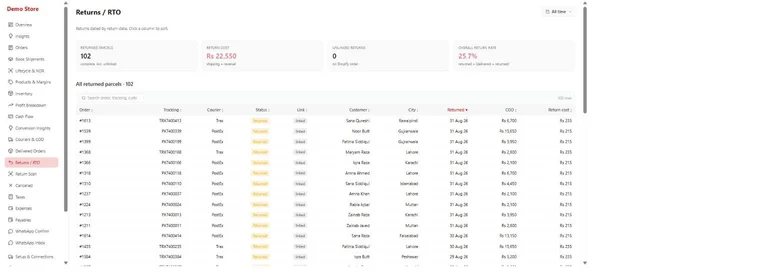
A courier marking a parcel "returned to origin" tells you a decision was made in its network. It does not tell you the parcel is on your shelf. Treating the two as the same event produces stock that exists in the system and not in the warehouse, which then gets sold.
Return Scan closes that gap. Your warehouse scans each returning parcel as it is unpacked; the app matches it to the order, restocks the items and updates Shopify. Anything the courier says came back but never got scanned stays on a list of parcels to chase — which is where the real losses hide.
What happens on a scan
- The order is matched by consignment number and marked received.
- Items go back into inventory, so the stock figure reflects reality rather than the courier's optimism.
- The order is cancelled and tagged in Shopify, so your storefront analytics and your ledger agree.
- The cost of the round trip is booked against the order, which is how it reaches net profit and the per-product margin.
Stopping the next one
Repeat-RTO and fraud-risk flags
A small number of customers account for a disproportionate share of refusals. Kaarobar matches customers across phone, email and address — the same person ordering under three spellings is one person — and flags a repeat-RTO history before the next order ships. Nothing is blocked automatically; the decision to ship, ask for advance payment, or call first stays yours.
Confirm before dispatch
The cheapest RTO is the one that never leaves the warehouse. WhatsApp order confirmation asks the customer to confirm before you book, and a "no" cancels the order at zero freight cost instead of at twice it.
Work the NDR first
Most returns pass through a failed delivery attempt before they become returns. That queue is where a return is still preventable — see NDR.
Returns marked but never received
Kaarobar lists every parcel the courier marked returned that has not been scanned into your warehouse, and exports it to Excel — the exact list to take to the courier.
See it on your own orders — install freeQuestions merchants actually ask
- What is RTO?
- Return to origin — a parcel the courier could not deliver and has sent back to the seller. On cash on delivery it is the normal outcome for refused orders, and it costs the seller freight in both directions plus packaging, with no revenue against it.
- Do I need a barcode scanner?
- No. Return Scan works from the consignment number, typed or scanned. A phone camera or a cheap USB scanner both work; so does typing it.
- Does it restock automatically?
- Yes, on scan, and it writes the cancellation and the tag back to Shopify so the two systems do not drift apart. That write-back applies going forward from the moment you connect the store.